
Future Trends in Manufacturing for Qatar’s Industrial Sector

Future trends in manufacturing in Qatar are rapidly shaping the nation’s industrial landscape as the country strengthens its diversification efforts under Qatar National Vision 2030. With rising investments, advanced technologies, and a strong focus on local production, Qatar’s manufacturing sector is entering a new era defined by innovation, efficiency, and global competitiveness.
At Rowwad Advisory & Business Solutions, we work closely with industrial clients to support digital transformation, supply chain optimization, feasibility studies, and growth strategies. Based on our experience and emerging global insights, here are the key trends reshaping the future of manufacturing in Qatar.
1. Smart Factories & Automation
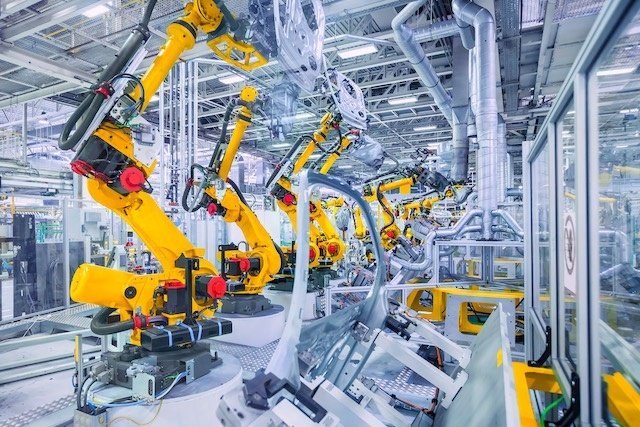
One of the most transformative trends is the shift toward smart factories powered by automation and real-time data. Manufacturers are increasingly adopting:
-
IoT-enabled sensors
-
Automated production lines
-
Robotics for repetitive tasks
-
Real-time performance monitoring systems
These technologies improve productivity, reduce downtime, and enhance decision-making.
For Qatar, automation also addresses labor shortages and boosts operational reliability.
2. AI & Data-Driven Manufacturing
AI is becoming a critical component of industrial operations worldwide — and Qatar is no exception.
AI is improving:
-
Predictive maintenance
-
Quality control
-
Demand forecasting
-
Production optimization
-
Resource planning (ERP + AI integration)
Data analytics is helping factories identify inefficiencies, reduce waste, and scale output more accurately.
At Rowwad, AI-driven data analytics and ERP implementations are already contributing to stronger industrial performance across clients in multiple sectors.
3. Growth of Specialized Industrial Clusters
Qatar is actively expanding industrial zones such as:
-
Ras Bufontas Free Zone
-
Umm Alhoul Free Zone
-
Mesaieed Industrial Area
-
Dukhan Industrial Estate
These clusters provide infrastructure, logistics support, and incentives for manufacturers.
The strategy encourages clustering of related industries (manufacturing, logistics, supply chain services, and R&D), which increases competitiveness and reduces production costs.
Industrial clustering will continue to attract foreign investors and enable SMEs to scale faster.
4. Sustainable & Low-Carbon Manufacturing
Sustainability is becoming a core requirement for industrial growth.
Qatar’s manufacturing sector is moving toward:
-
Cleaner production processes
-
Waste reduction initiatives
-
Energy-efficient systems
-
Recycled raw materials
-
Green building requirements for factories
With Qatar’s commitment to environmental goals, manufacturers adopting eco-friendly processes will benefit from stronger market positioning and regulatory alignment.
5. Localizing Supply Chains
Global disruptions have pushed manufacturers to redesign their supply chains.
Qatar is now prioritizing local production of essential goods across:
-
Food industries
-
Construction materials
-
Pharmaceuticals
-
Industrial components
-
Packaging and plastics
Localization reduces dependence on imports, enhances national resilience, and creates new opportunities for local SMEs looking to enter the industrial space.
6. Advanced Materials & New Product Categories
Qatar is investing in advanced research to support high-value manufacturing fields such as:
-
Composites and lightweight materials
-
Industrial plastics and polymers
-
Electronics and smart device components
-
Renewable energy equipment
-
3D printing materials
The shift toward advanced materials will unlock new export potential, increase industrial sophistication, and attract global partnerships.
7. Rise of Additive Manufacturing (3D Printing)
3D printing is revolutionizing prototyping and production for many industries.
In Qatar, this technology is gaining traction in:
-
Construction
-
Automotive and marine manufacturing
-
Medical devices
-
Industrial machinery parts
-
Consumer products
Additive manufacturing reduces production time, lowers tooling costs, and allows customization — making it an ideal technology for Qatar’s innovation-driven vision.
8. Workforce Upskilling & Digital Competency
As factories become more advanced, the workforce must evolve with them.
Key skills for Qatar’s manufacturing future include:
-
Automation operation
-
Robotics programming
-
Data analytics
-
ERP process management
-
Digital quality control
-
AI-assisted production planning
Technical training and digital certifications will become essential for maintaining a competitive industrial workforce.
9. Stronger Integration Between Manufacturing & Logistics
Manufacturing growth depends heavily on logistics efficiency. Qatar’s continuous investments in:
-
Hamad Port
-
Air cargo hubs
-
Free zones
-
Smart logistics systems
…will reduce lead times and improve export competitiveness.
Integration between manufacturers and logistics partners (including digital platforms) will be a major growth driver in the coming years.
10. Increased Collaboration Between Government & Private Sector
Government entities such as QDB, IPA Qatar, MOCI, and Free Zones Authority are providing support through:
-
Industrial financing
-
SME development programs
-
Export readiness support
-
R&D incentives
-
Industrial land and facilities
These collaborations will accelerate the shift toward a more diversified, knowledge-based industrial economy.
Conclusion
Qatar’s manufacturing sector is entering a new phase of innovation, resilience, and global competitiveness. By embracing smart technologies, sustainable practices, local supply chains, and advanced materials, manufacturers will be well-positioned to lead the next wave of industrial growth.
At Rowwad Advisory & Business Solutions, we help industrial companies navigate these trends through feasibility studies, market intelligence, digital transformation, workflow optimization, financial planning, and strategic consulting enabling them to grow confidently in a rapidly evolving landscape.